
The Door That Slams
On The King's Speech, The Slammed Door, And The Throne That Does Not Change
Once a year, a man in a black coat walks down a corridor in the Palace of Westminster. He carries a black rod. He has come to summon the country's elected members to hear their king. As he reaches the door of the House of Commons, the Commons slams it in his face.
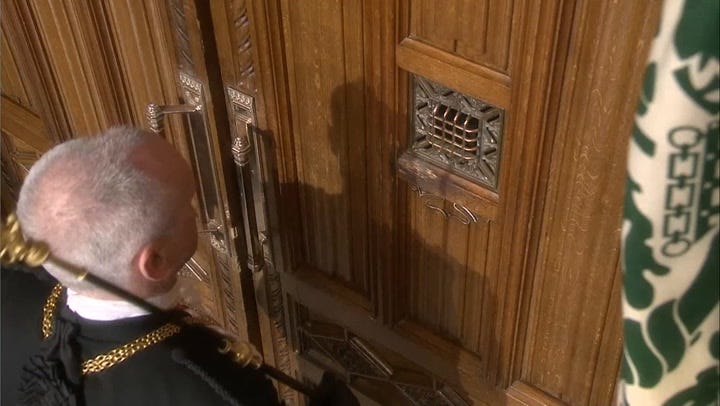
He knocks. Three times. Only then does the door open.
The slam has a history. On a January day in 1642, a king walked into the Commons with armed men, hoping to arrest five of its members. They had been warned and were gone. The Commons has shut its door against the Crown's messenger ever since.
A few minutes after they have let her in today, the King reads his speech. Over thirty-five bills. A country to be put right. Hope, the text says, to be "restored." It is a striking word.
I watch all this with two feelings at once. The first is interest. The bills matter. An asylum law, a housing reform, a plan for children with special needs — these touch real lives, including some I love. Whether they pass or fail will change someone's morning. We cannot look away.
The second feeling is quieter. A government that promises to restore hope has, by its own grammar, admitted that hope has gone. A people who needed hope brought back to them have, somewhere along the way, mislaid it. Where did it go? What did we let ourselves want, and what stopped us believing it could come? That is not a small admission. It is worth sitting with before we hurry on to argue about the policies.
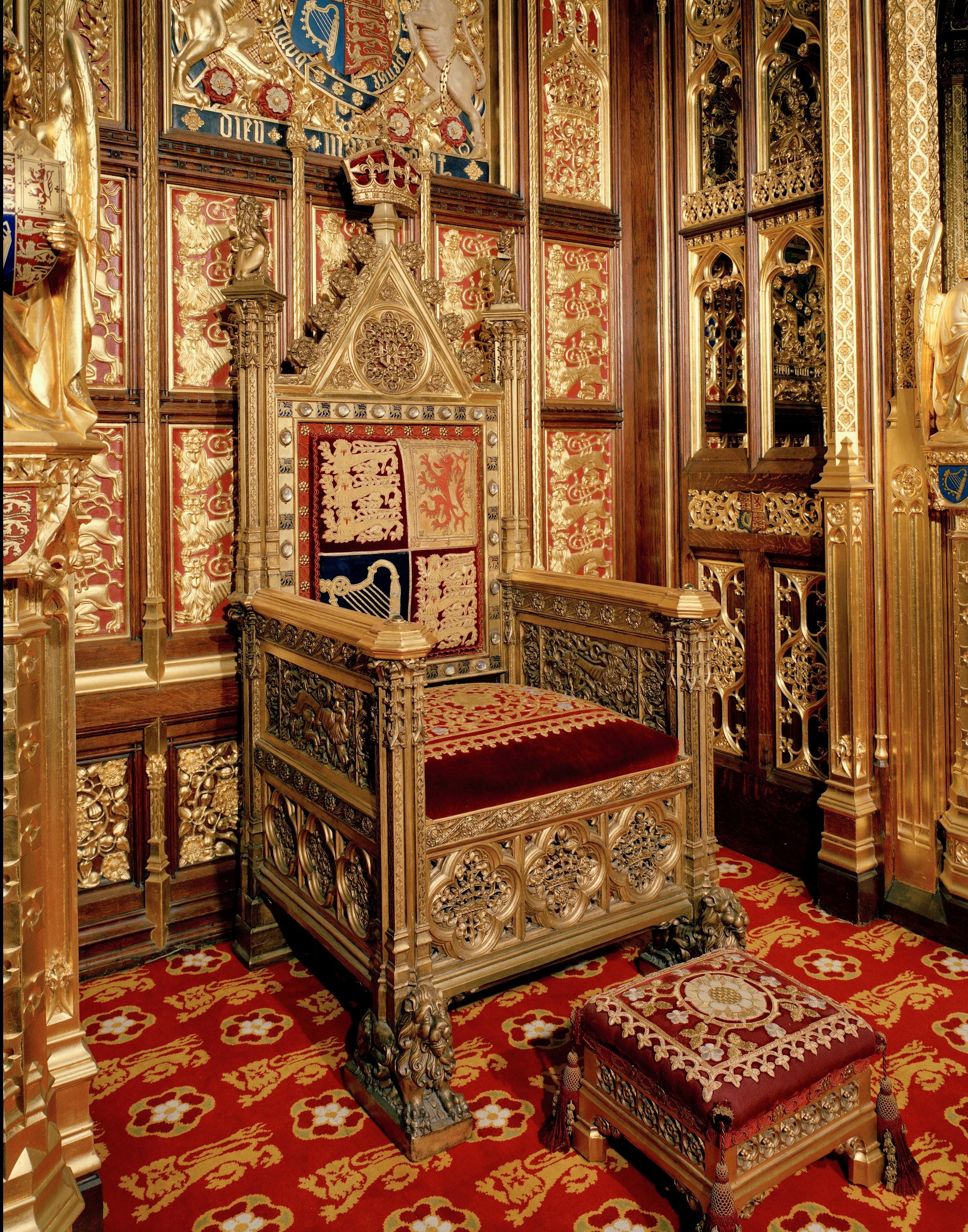
There is something else worth noticing today. The King reads a speech written for him by a Prime Minister whose own colleagues are openly preparing to remove him. Westminster has spent the morning briefing that the moves against him may begin tomorrow. The crown speaks the government's words. The government, behind the throne, is no longer master of its own programme. Visible power and real power have come apart in plain sight.
The psalm I keep returning to today is one the church has prayed for centuries at funerals and at bedsides:
"Do not put your trust in princes, in mortals, in whom there is no help. When their breath departs, they return to the earth; on that very day their plans perish. Happy are those whose help is the God of Jacob, whose hope is in the Lord their God…" (Psalm 146:3–5, NRSV Anglicised)
The psalmist is not bitter. He does not say princes are bad. He says they are mortal. Their breath goes out. Their plans go with them. He has seen many thrones come and go, and learned, slowly, which Throne does not.
This is not the song of a man who has given up on the world. It is the song of a man who has worked out where to put his weight.
Pilgrims are not above politics. The same psalm that warns against trusting princes ends by praising the God who "executes justice for the oppressed… gives food to the hungry… sets the prisoners free… lifts up those who are bowed down" (Psalm 146:7–8, NRSV Anglicised). That work, in our world, is often done through bills and budgets, through courts, care homes, and council houses. To shrug at Westminster is not faithfulness. It is vanity dressed up as piety.
And yet we do not stake our hope on Westminster either. Pilgrims do not walk home from a King's Speech, either buoyant or crushed. We carry the day's news the way we carry the weather — paying attention, dressing for it, but never mistaking it for the sky.
Jesus said it plainly to friends who were already arguing about who would sit where.
"You know that among the Gentiles those whom they recognise as their rulers lord it over them, and their great ones are tyrants over them. But it is not so among you" (Mark 10:42–43, NRSV Anglicised).
Power, for the pilgrim, is always under judgement — including the power that thinks it has prevailed today, and the power that thinks it will prevail tomorrow.
Which is why the slammed door matters.
The Commons shuts its door against the Crown's messenger to make a point. No power, however gracious, however ancient, may simply walk in. Every authority must wait, knock, and ask. That is an instinct the Christian tradition has cherished and shaped, even if Parliament has long forgotten where some of it was learned.
Today, a government read out its plans for the country. By the weekend, its leader may be gone. By autumn, the names will have changed, and the briefings will have a different shape. The bills will pass or fail. Other speeches will follow. The crown will be carried back to its case, the throne will sit empty, and within a few years, there will be different faces in those red robes.
The Throne the pilgrim watches does not change.
So here is the question to take with you into the rest of your week. On which door are you knocking?
If it is Parliament's door, knock anyway — but knock as one whose deeper hope is already at home.